
| Artificial Intelligence (AI) is transforming the world faster than ever before. It refers to the development of machines that can perform tasks requiring human-like intelligence. Emerging AI technologies combine vast amounts of data, advanced algorithms, and powerful computing systems to solve complex problems. One of the key branches of AI is machine learning, which allows computers to learn from experience rather than being explicitly programmed. Deep learning, a more advanced form of machine learning, uses neural networks that mimic the structure of the human brain to analyze massive datasets and identify patterns.Today, AI can recognize speech, understand natural language, and even interpret emotions. It powers self-driving cars by detecting objects, predicting movements, and making real-time decisions. Virtual assistants like Siri and Alexa rely on AI to process and respond to voice commands. Chatbots are now capable of human-like conversations, offering 24/7 customer support and information services. AI also drives personalized recommendations on platforms such as Netflix, YouTube, and Spotify, helping users discover content they’re likely to enjoy.Researchers and policymakers are focusing on developing responsible AI — systems that are fair, unbiased, and explainable. Explainable AI helps users understand how decisions are made, increasing trust and accountability. The rise of AI has also changed the job market. While automation may replace certain roles, it is also creating new opportunities in AI engineering, data science, and machine learning research. Universities and training programs worldwide are preparing students for this AI-driven future.Emerging AI is not just a tool — it is a partner in innovation, creativity, and discovery.Emerging Artificial Intelligence (AI) technologies are reshaping the modern world by combining the power of data, algorithms, and computing to perform tasks once thought to require human intelligence. From self-driving cars that navigate complex roads to voice assistants that understand natural speech, AI is becoming an essential part of daily life.The rapid growth of AI also raises important ethical questions. Who is responsible when an autonomous system makes a mistake? How do we prevent bias in algorithms trained on imperfect data? Researchers and policymakers are working to ensure AI remains transparent and fair. Balancing innovation with accountability is essential — because while AI has the power to revolutionize industries, it must always serve humanity with integrity and respect for human values. 🧠 Artificial Intelligence — The Future of Innovation Artificial Intelligence (AI) has rapidly become one of the most transformative technologies of the 21st century. By enabling machines to learn from data, recognize patterns, and make decisions with minimal human intervention, AI is reshaping industries across the globe. From healthcare and education to finance and space exploration, intelligent algorithms are improving efficiency, accuracy, and creativity. AI systems are now capable of generating human-like text, understanding speech, and even creating art. However, as this technology advances, it also raises important questions about ethics, privacy, and employment. Balancing innovation with responsibility will be the key to ensuring that AI continues to serve humanity for the greater good.From financial forecasting to smart farming, AI is helping humans solve complex global challenges. Its ability to adapt and learn continuously makes it a transformative force that’s redefining how societies function in the digital age. | 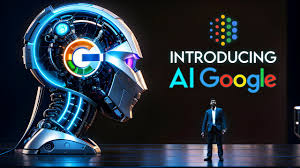 In healthcare,
AI plays a revolutionary role in early disease detection and diagnosis. It can analyze
X-rays, MRI scans, and medical data faster and more accurately than human specialists. AI also assists in
drug discovery by studying molecular structures and predicting effective compounds. In education,
intelligent learning platforms use AI to personalize lessons, helping teachers better understand student
progress and needs. Translation tools like Google Translate use neural networks to make cross-language
communication more natural and accurate than ever before.The financial industry benefits greatly from
emerging AI systems. Automated trading platforms analyze vast amounts of market data to predict trends and
make split-second trading . Banks and financial institutions use AI to detect fraud and monitor suspicious
activity. In agriculture, AI-driven drones analyze soil conditions, monitor crops, and detect
pests, improving productivity and sustainability. Environmental scientists use AI to track climate change,
model weather patterns, and predict natural disasters with increasing accuracy.Emerging AI is now central
to Industry 4.0, where smart factories use intelligent robots that can collaborate safely with humans.
Robots
and drones powered by AI are becoming common in warehouses, delivery systems, and exploration. In
scientific fields, AI is speeding up research, from discovering new materials to advancing space
exploration. NASA
uses AI to analyze cosmic data, while environmental researchers use it to predict climate shifts and
protect
endangered species. AI’s influence even extends to global defense systems, though the ethical implications
of autonomous weapons remain a serious concern. With the right balance of ethics and technology, AI
represents the next great chapter in human evolution.. As AI continues to evolve, its ethical development
— ensuring fairness, transparency, and
accountability In healthcare,
AI plays a revolutionary role in early disease detection and diagnosis. It can analyze
X-rays, MRI scans, and medical data faster and more accurately than human specialists. AI also assists in
drug discovery by studying molecular structures and predicting effective compounds. In education,
intelligent learning platforms use AI to personalize lessons, helping teachers better understand student
progress and needs. Translation tools like Google Translate use neural networks to make cross-language
communication more natural and accurate than ever before.The financial industry benefits greatly from
emerging AI systems. Automated trading platforms analyze vast amounts of market data to predict trends and
make split-second trading . Banks and financial institutions use AI to detect fraud and monitor suspicious
activity. In agriculture, AI-driven drones analyze soil conditions, monitor crops, and detect
pests, improving productivity and sustainability. Environmental scientists use AI to track climate change,
model weather patterns, and predict natural disasters with increasing accuracy.Emerging AI is now central
to Industry 4.0, where smart factories use intelligent robots that can collaborate safely with humans.
Robots
and drones powered by AI are becoming common in warehouses, delivery systems, and exploration. In
scientific fields, AI is speeding up research, from discovering new materials to advancing space
exploration. NASA
uses AI to analyze cosmic data, while environmental researchers use it to predict climate shifts and
protect
endangered species. AI’s influence even extends to global defense systems, though the ethical implications
of autonomous weapons remain a serious concern. With the right balance of ethics and technology, AI
represents the next great chapter in human evolution.. As AI continues to evolve, its ethical development
— ensuring fairness, transparency, and
accountability
|
Smart cities are another innovation born from emerging AI. Urban systems powered by AI manage traffic flow, optimize energy usage, and reduce waste. Renewable energy grids use AI to predict solar and wind power output, ensuring efficient distribution. In entertainment, AI is reshaping creativity. Tools like DALL·E and Midjourney generate digital art, while musicians use AI to compose melodies and experiment with sound. Filmmakers and game developers rely on AI for realistic visual effects, adaptive storytelling, and intelligent game design.AI is also enhancing cybersecurity by detecting and preventing digital threats in real time. In business, AI analytics tools help companies understand customer behavior, predict demand, and automate routine processes. Voice synthesis systems now create lifelike digital narrators and virtual news anchors. Journalists use AI for summarizing large documents and generating reports efficiently. However, as AI becomes more powerful, it also brings challenges related to data privacy, security, and ethics. Many AI systems are trained on massive datasets that may contain personal or biased information, raising questions about fairness and transparency.As technology advances, quantum computing could take AI capabilities to a new level, enabling faster processing and deeper insights. In the coming decade, AI will continue to evolve, blending seamlessly into daily life through smart homes, connected vehicles, and personalized digital experiences. However, responsible development and global cooperation are essential to ensure AI benefits humanity as a whole.Machine learning and deep learning enable systems to analyze massive datasets, identify hidden patterns, and make predictions with remarkable accuracy. In healthcare, AI assists doctors in diagnosing diseases earlier than ever before, while in business it helps companies detect fraud, forecast trends, and improve customer experiences.Across the world, AI is influencing everything from climate science to education. Smart algorithms help meteorologists predict extreme weather patterns, while adaptive learning platforms personalize lessons for students. AI-based translation systems are breaking down language barriers, allowing people from different cultures to communicate more easily. As AI integrates into everyday life, it promises a more connected and intelligent world — but only if developed responsibly. |
More From This Page